Your team's workday.
Rethought from the substrate.
We didn't set out to build another project management tool. That problem has been solved — Jira, Asana, Monday, ClickUp all do it well enough.
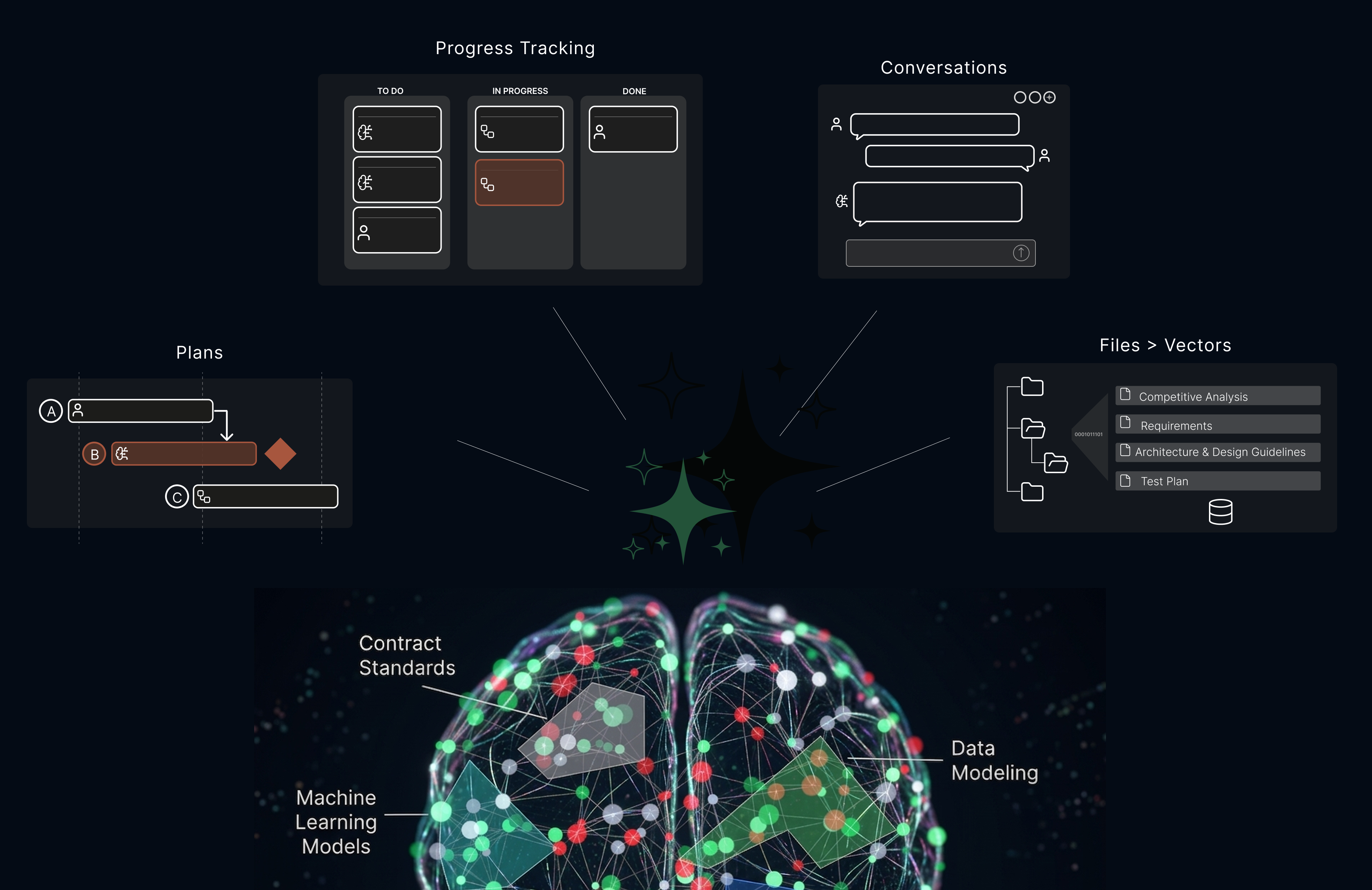 PortableMind Knowledge Server
But we saw something they couldn't easily fix: AI was about to fundamentally change how teams plan, build, and share knowledge. And the existing tools were built on architectures that predate that change. Bolting AI onto a ten-year-old data model gives you a chatbot in a sidebar. It doesn't give you an AI that can look at your project plan, your design docs, and your last sprint conversation and tell you whether you're on track.
PortableMind Knowledge ServerThat required a rethink from the substrate layers — data models, memory, tenancy, security — designed from day one for a world where AI is a participant, not an add-on.
The result is five modules that look familiar on the surface but work fundamentally differently underneath.
Projects
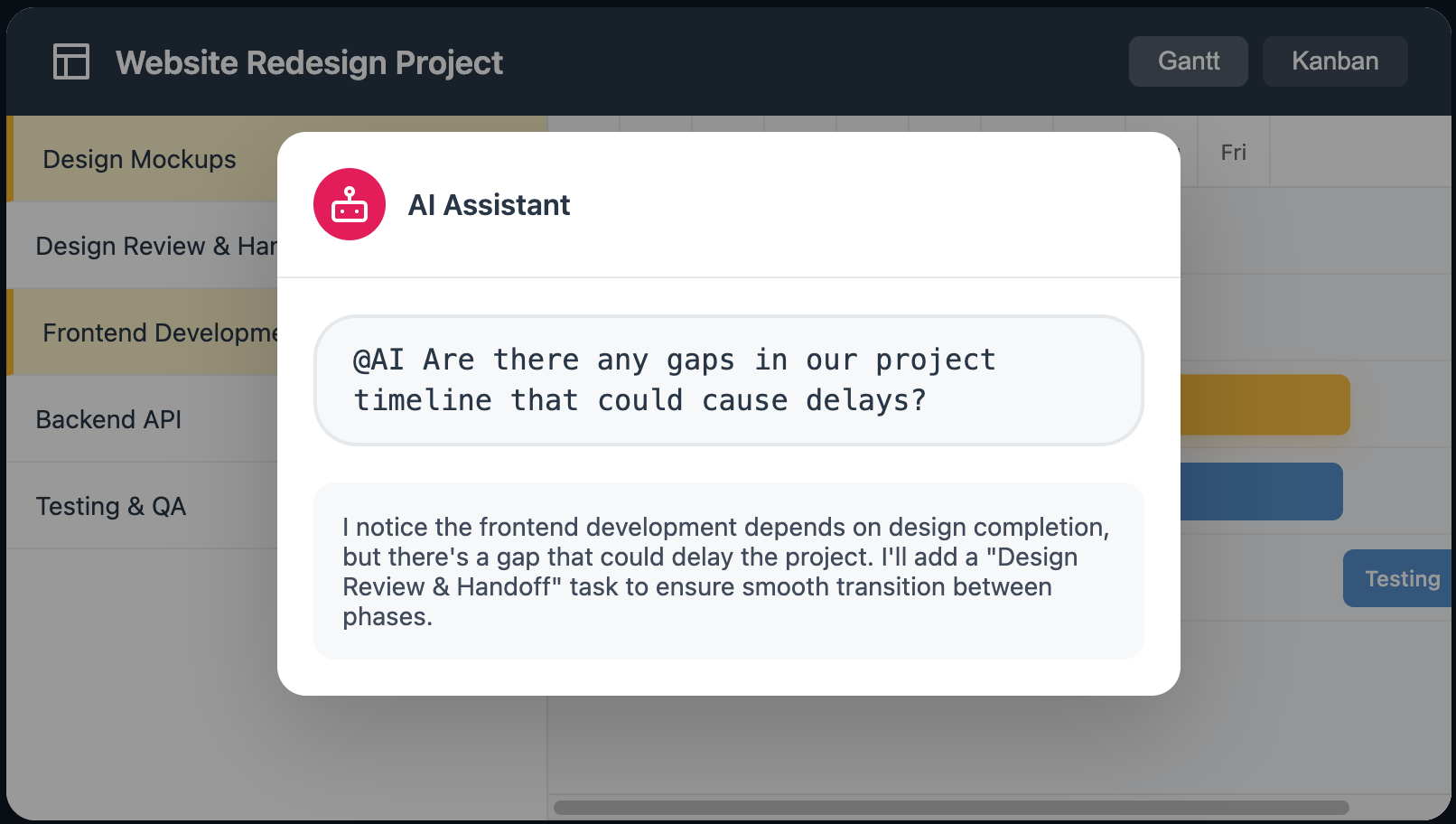
Gantt charts for planners. Kanban boards for developers. The same work, visible through the surface each audience already knows.
Tasks
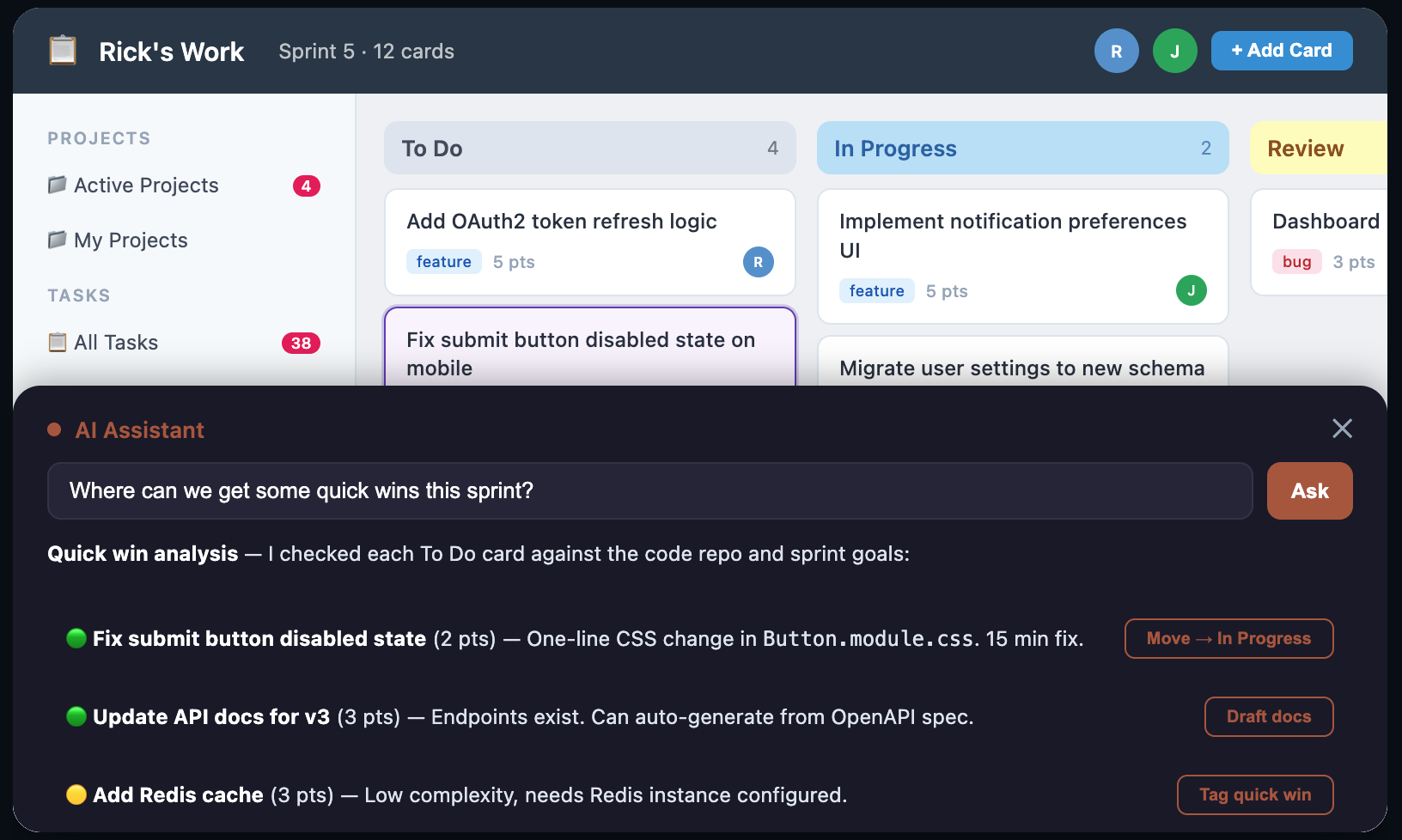
Assign, prioritize, track. Connected to the project plan above and the conversations below — not floating in a separate tool.
Conversations
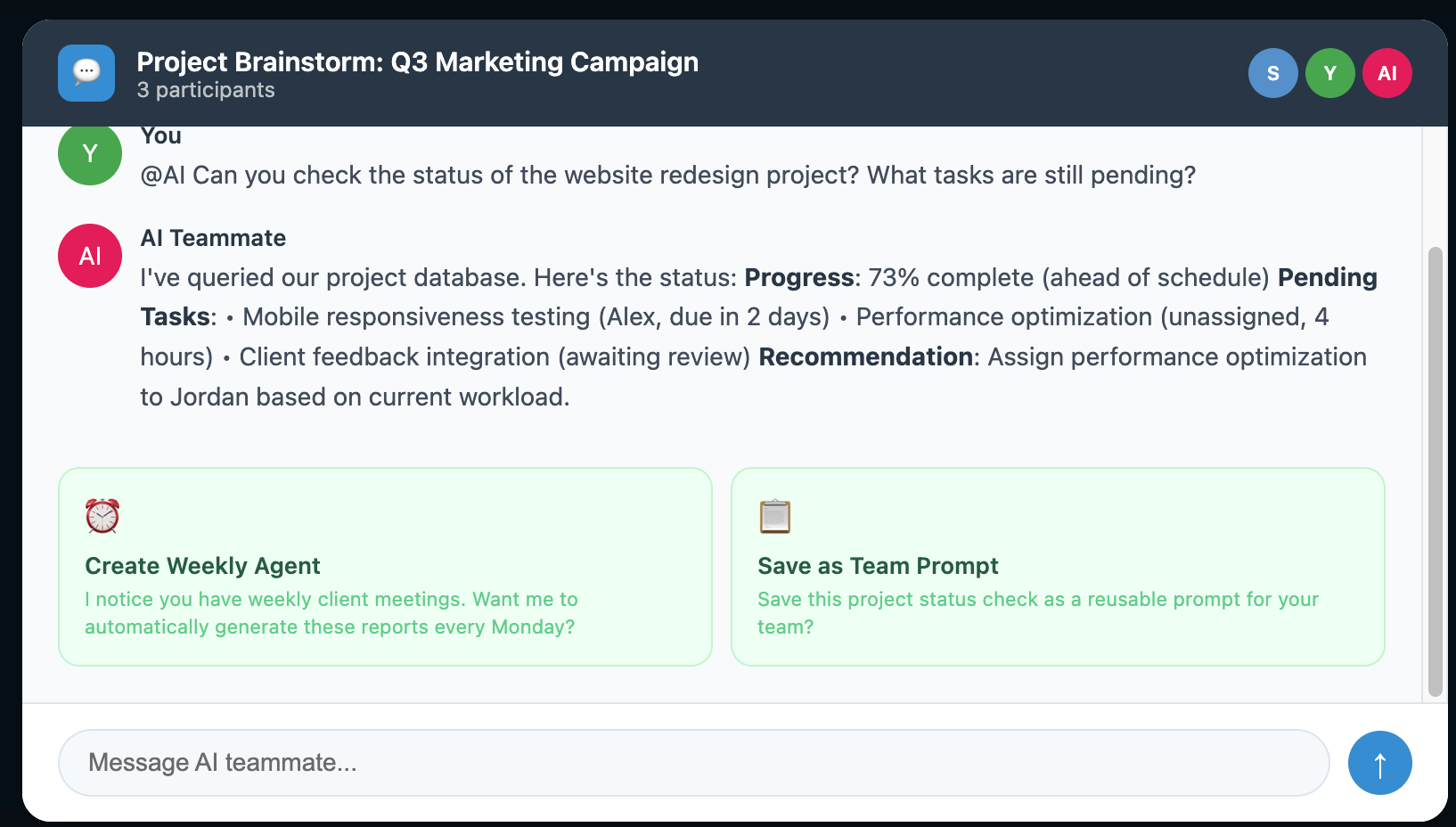
Team chat where context travels with the message. Select three messages and turn them into sprint tasks. The AI was in the room — it knows what was discussed.
Files & Knowledge
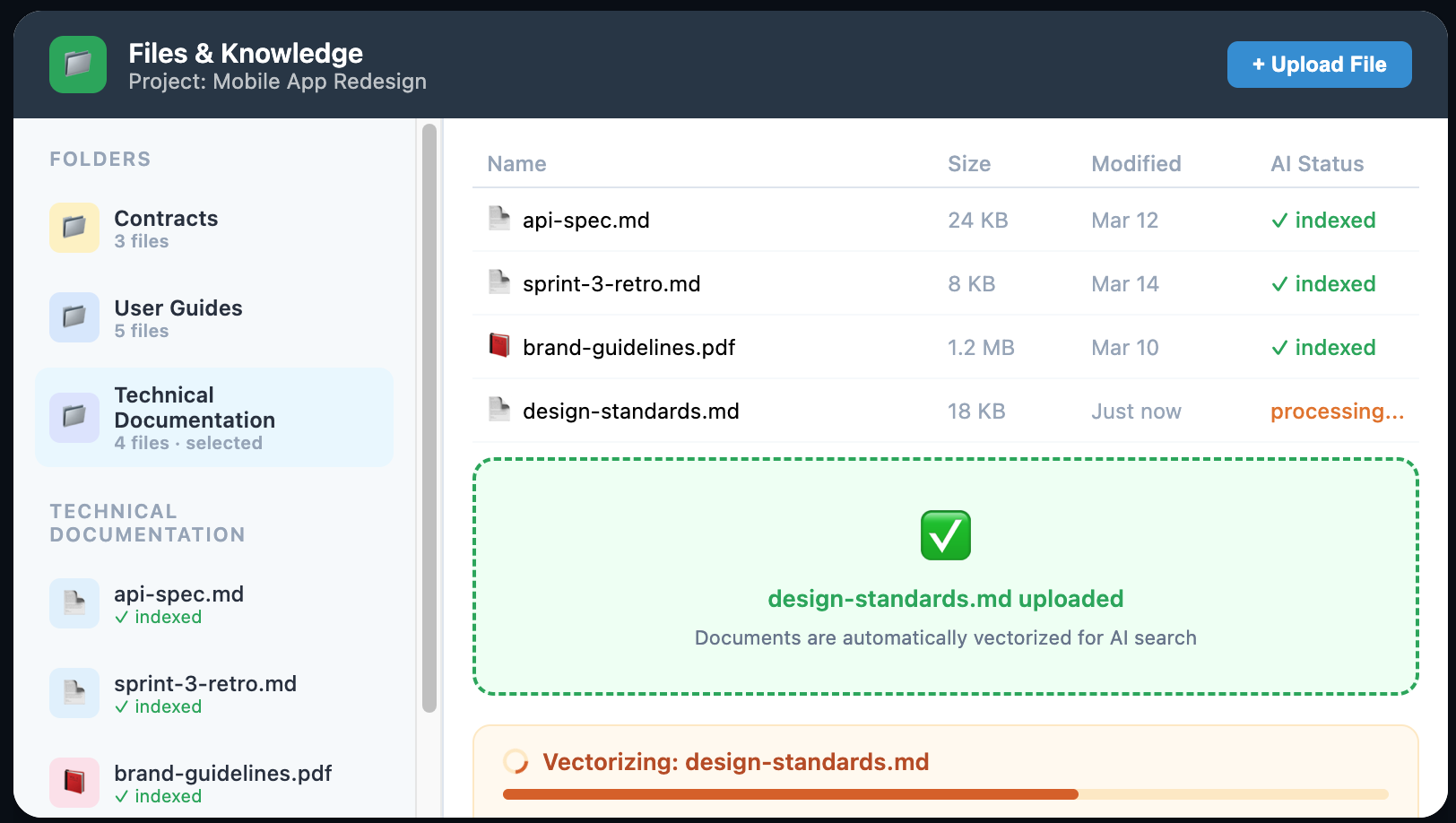
A document repository with built-in AI search. Not just file storage — vectorized, contextual, connected. Ask the AI: "does the output from this task match our documented design guidelines?" and it can actually answer, because it sees both.
The layer that connects them
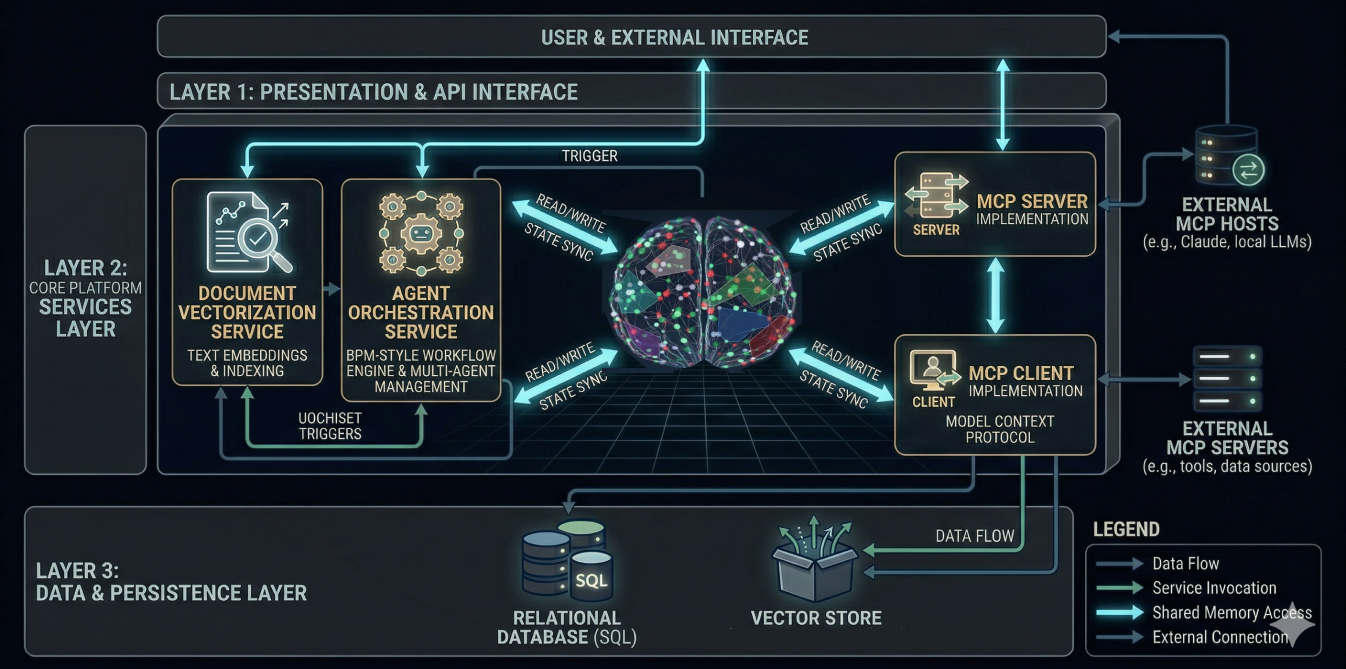
Every module feeds context to the PortableMind Knowledge Server. The AI doesn't just live in one module — it works across all of them, carrying context from projects to conversations to documents and back.
Built for the tools you already use
The Knowledge Server speaks MCP — the same protocol your coding agents use. Connect your development tools, CI/CD pipelines, and communication platforms to the same context your team works in.
See how agents connect